
He Ran America's Most Dangerous WWII Mission From Neutral Switzerland
Most WWII spy stories happen in Berlin or London or occupied France. This one happens in Switzerland. And that's exactly what makes it so interesting.
Allen Dulles arrived in Bern in 1942. Switzerland was neutral. Both sides had agents there. And Dulles — working as the OSS station chief — set up shop in a townhouse and started building one of the most important intelligence operations of the whole war.
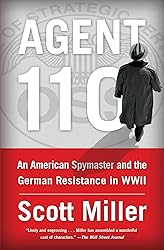
Scott Jeffrey Miller tells that story in Agent 110. And he tells it well.
Dulles wasn't a field man in the traditional sense. He didn't parachute into enemy territory. He sat in Bern. He met people. He listened. He judged — fast and sharp — who was real and who was a plant. And the people who came to him were extraordinary. German officers. Diplomats. Civilians with connections inside the Nazi machine. Men who believed Hitler was destroying Germany and wanted out before the end came.
Some of them were tied to the July 20, 1944 plot to kill Hitler. Dulles knew about that world. He worked it. He gathered what he could and sent it back to Washington and London.
Here's what Miller does well. He shows you the pressure behind every meeting. Every contact could be genuine or a trap. Every message could contain real intelligence or deliberate lies. Dulles had to make calls with incomplete information, often fast, always with lives on the line. The book puts you inside that tension.
Operation Sunrise gets real attention here too. Toward the end of the war, Dulles negotiated directly with German officers in northern Italy — trying to arrange a surrender that would end the fighting there before the full German collapse. The Soviets found out and went angry. They saw it as the West cutting a separate deal. That episode says a lot about how postwar tensions were already building while the war was still going.
And that's the bigger theme of this book. Dulles wasn't just gathering intelligence. He was watching the Soviet Union. He saw what Moscow wanted in Eastern Europe. And he shaped his work — who he talked to, what deals he explored — with that threat in mind. In some ways this book is as much about the early Cold War as it is about WWII.
I gave this three stars on Goodreads. It's a good book — solid research, clear writing, real access to the story. But it doesn't quite reach the level of gripping. Some sections run dry. The political chess between Washington, London, and Moscow can drag if you're not already interested in that period.
But here's what keeps it worth reading. Dulles himself is a fascinating figure. This is the man who later became CIA director. The habits he built in Bern — the way he weighed contacts, trusted his instincts, and kept his eye on Soviet power — shaped how he ran American intelligence for years after the war.
Three stars. A solid, honest account of a hidden WWII mission that most people have never heard of. Worth picking up if you love this period of history.
Comments
Post a Comment