
A Former Priest Asks the Question the Church Has Avoided for Centuries
This is not an easy book. I'll say that upfront. But some books aren't supposed to be easy. Some books are supposed to make you stop and think hard about things that got left unsaid for too long.This is one of those books.
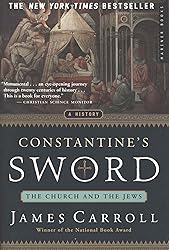
James Carroll was a Catholic priest. He left the priesthood and became a writer. But his faith never left him. And that's what makes Constantine's Sword so different from other books about the Church and the Jews. Carroll loves his faith. He loves the Church. And he still puts it all on trial.
His argument starts with Emperor Constantine. When Constantine made Christianity the religion of the Roman Empire in the fourth century, everything changed. The cross stopped being a sign of sacrifice. It became a sign of power. And power, Carroll argues, is where the trouble begins.
From there he walks through two thousand years of history. The Crusades, where Jewish communities were slaughtered on the road to Jerusalem. The Inquisition. The forced conversions. The blood libels — false claims that Jews killed Christian children for rituals — that spread through Europe for centuries. And then the Holocaust. Six million dead. And the Church, Carroll says, was too silent for too long.
That section hits hardest. He doesn't just describe what happened. He asks why. Why did Church leaders look away? He points to Pope Pius XII and asks what a stronger voice from Rome might have done. Carroll doesn't lay all blame at one man's feet. But he doesn't let anyone off the hook either.
What makes Carroll different from other critics is his tone. He doesn't write in anger. He writes in grief. He still believes the Church can be better. He still believes faith points toward good. But he insists you can't get there without facing what went wrong. That honesty is what gives this book real weight.
He writes plainly too. For a book of this size — it runs long — it stays readable. He keeps the language clear. He tells the stories of real people — priests who showed courage, leaders who chose silence, survivors who lived with what the world failed to stop.
And he calls for something. Not just understanding. Action. Reform. An honest reckoning between Christians and Jews that goes beyond polite dialogue and touches the real roots of what happened.
I gave this four stars on Goodreads. It's long and some sections slow down. But the core argument is one of the most important you'll read in any religious history book. Carroll asks the Church to face itself fully. And he does it as someone who still cares about what the Church is and what it can become.
If you've ever wondered how centuries of religious teaching fed one of history's darkest events — this book goes there. With honesty. With courage. And with love for something it still believes can heal.
Comments
Post a Comment