
They Trained Hard. Lived Rough. And Wrote the Book on Special Forces.
In 1941, a young British officer named David Stirling had an idea. Most people thought it was crazy. Small teams of soldiers, dropped behind enemy lines, hitting hard and fast and vanishing before anyone could strike back. No big armies. No long supply lines. Just nerve, speed, and surprise.
Stirling pitched it. Churchill said yes.
And that's how the SAS was born.
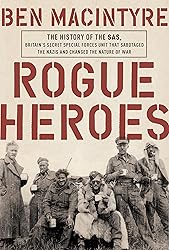
Ben Macintyre tells this story in Rogue Heroes. And like always, he tells it well. He had full access to the SAS's own archives — diaries, memos, maps, photos — material that had never been opened to a writer before. He also talked to surviving members of the original unit. That access shows on every page.
The early SAS was a mess. And I mean that in the best way. These men trained in brutal conditions in the North African desert. Some died in training before they ever saw combat. The gear was bad. The plans were rough. Nobody really knew if any of it would work.
And then it did.
The SAS started hitting German airfields in North Africa. They blew up planes on the ground. They ambushed convoys. They moved at night and disappeared before sunrise. The Germans couldn't figure out how such small teams were doing this kind of damage. And that confusion was the whole point.
What makes this book work is the people. David Stirling was bold, almost reckless, full of big ideas. Paddy Mayne was a different kind of force — fierce, unpredictable, and incredibly effective in combat. Jock Lewes brought discipline and training know-how that gave the unit its edge. Macintyre doesn't turn these men into legends without cracks. He shows their flaws too. The drinking. The risk-taking. The toll all of it took.
That's what I liked most. This isn't a clean hero story. It's messy and human. These men were brave, but they were also reckless, sometimes to the point of being dangerous to themselves and each other. Macintyre doesn't smooth that over.
The book moves fast. Short chapters. Real tension in every mission. You feel the heat of the desert and the fear before every raid. And by the end, you understand something important — modern special forces all over the world trace their roots back to this handful of men who broke every rule in the book and somehow made it work.
I gave this four stars on Goodreads. It's well researched and reads fast. A few sections in the middle slow down a bit, but the overall story carries real weight.
There's also a TV series based on this book, and it's worth watching after you finish reading. The show changes a few details, but the spirit of the story stays the same.
Four stars. If you love WWII history, special forces stories, or books about people who refuse to follow the rules — this one delivers.
Comments
Post a Comment