
One Person Didn't Build the Digital Age. A Whole Lot of People Did.
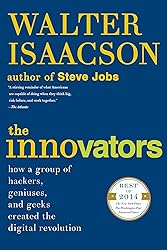
I've been on a Walter Isaacson run lately. Steve Jobs. Leonardo da Vinci. And now this one. And I'll say straight up — The Innovators might be my favorite of the three.
That surprised me. I expected a tech history lesson. Dry. Dense. Full of specs and dates. What I got was a story about people. Real people with real drive, real disagreements, and real passion for building things that didn't exist yet.
That difference matters.
Here's the big idea at the heart of this book. The digital revolution wasn't the work of one lone genius. It was the work of teams. Always teams. One person had an idea. Another person built the hardware. A third wrote the code. And without all three, nothing got done. Isaacson makes this case with evidence from every chapter — and by the end, it's impossible to argue with him.
He starts with Ada Lovelace. The 1840s. A woman who understood what Charles Babbage's analytical machine could really do — not just math, but music, language, anything that could be turned into numbers. She wrote the first computer program a hundred years before a computer existed to run it. That's the kind of mind Isaacson loves. Ahead of the moment. Impossible to fully place in their own time.
From there he moves through Alan Turing, who built machines that could think and broke Nazi codes in the process. Then the transistor teams at Bell Labs. The microchip men at Fairchild and Intel. The programmers who built ARPANET — the network that became the internet. And then the personal computer builders. Wozniak. Gates. Jobs. People who wanted to put this power in the hands of regular people, not just governments and universities.
Can you feel how big that shift was? From room-sized machines that governments ran to a box on your desk that you owned? That was a revolution. And Isaacson walks you through every step of how it happened.
What I love about his writing is the pace. He doesn't drag. Short chapters. Clear writing. He explains the technical stuff in plain language and then gets right back to the people. And the people are always interesting. Even the ones who failed. Maybe especially the ones who failed — because their failures set up the next team's win.
There's a section on the internet that really got me. ARPANET started as a military project. Then academics used it. Then hobbyists found their way in. Then it grew into something nobody planned and nobody owned. That organic, messy, uncontrolled growth is exactly what makes the internet what it is. Isaacson shows how that happened and why no single person or company could have built it alone.
Same with software. Same with the graphical interface. Same with search. Every big leap had a team behind it, and behind the team was a culture. A shared belief that the next thing was worth building.
Now here's my honest take on the book as a whole. I gave this five stars on Goodreads. But I'll warn you — it runs long. Some sections on early hardware history get dense. The transistor chapters especially. But push through them. Because every slow section builds toward something bigger.
And the last few chapters are worth everything. Isaacson pulls back and asks — what does this story teach us about creativity? What kind of people drive innovation? What kind of culture lets them do their best work? His answers are thoughtful and grounded in everything that came before.
The lesson is simple but powerful. Curiosity plus collaboration equals progress. The digital world got built by people who asked questions and then found other people to help them answer those questions. That's it. No lone genius. No secret formula. Just smart people working together on things they cared about.
Five stars. If you've already read Hackers by Steven Levy or Revolution in the Valley by Andy Hertzfeld, this book completes the picture. It zooms out to show the whole timeline — from the first computer program to the world wide web. And it does it in a way that makes you proud of what humans can build when they actually work together.
Pick it up. Take your time with it. It's worth every page.
Comments
Post a Comment