
The Bomb Needed Uranium — And It Came From Africa
You know the atomic bomb story. Manhattan Project. Los Alamos. Oppenheimer. But here's the part most people skip right over — where did the uranium actually come from?
Africa. The Belgian Congo, to be exact.
And getting it out was a whole mission on its own. A dangerous one.
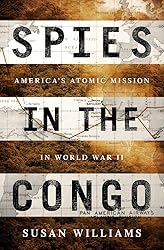
Susan Williams digs into that mission in this book and she pulls out a story most history books don't tell. The Shinkolobwe Mine in Katanga held some of the richest uranium ore in the world. Albert Einstein told President Roosevelt this directly. And the US knew that if the Nazis got to it first, the whole war could flip.
So America sent spies.
A small team from the OSS — the wartime intelligence unit that came before the CIA — went into the Belgian Congo to lock down the uranium and keep Nazi agents away from it. They had to move ore through a port in Angola packed with enemy spies. Then 1,500 miles by rail across the Congo. Then by ship or plane to the US. At every step, German agents could hit them.
Think about that for a second. The bomb that ended World War II started its journey in the heart of Africa, guarded by a handful of people most of us have never heard of.
Williams names them. Wilbur Owings Hogue led the OSS team on the ground. Edgar Sengier handled the mine side. Virginia Hall — one of the most daring OSS agents of the war — plays a key role too. These are real people with real fear and real stakes. And Williams writes them that way. She doesn't flatten them into symbols. She shows you who they were.
What I didn't expect was how much this book deals with colonialism. Belgium ran the Congo hard. The Congolese workers who mined that uranium did the most dangerous work and got the least in return. Williams doesn't brush past that. She puts it right in front of you. And it stays with you.
Now, I'll be straight. This book can get heavy. It carries a lot of detail and some parts slow down. But the core story is worth it. You just have to push through the dense sections to get to the good stuff.
And the good stuff is very good.
Here's what hit me hardest — this mission worked. A small team of OSS agents, scientists, miners, and local workers pulled it off. The Nazis never got the uranium. The Manhattan Project got what it needed. The war ended. And almost nobody knows this part of the story.
Can you think of a bigger untold chapter in WWII history than that?
Williams built this book from American and British archives. She traveled. She did the work. And the result is a clear, honest account of how African resources — and the people connected to them — shaped the nuclear age.
If you love WWII history and want a story that goes way off the beaten path, this one delivers. It's not a fast read. But it's an important one. And some books earn their weight. This is one of them.
Comments
Post a Comment