
He Had No Formal Education. He Changed the World Anyway.
I'll be honest. I almost skipped this one. I figured I already knew the story. Famous painter. Renaissance man. Mona Lisa. What else was there to learn?
A lot. As it turns out. A whole lot.
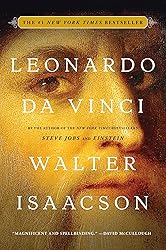
Walter Isaacson's biography of Leonardo da Vinci is one of the best books I've read in years. And I say that as someone who has read hundreds of biographies. This one stands apart because of how Isaacson gets inside the man — not just the paintings, but the mind behind them.
Let's start with something that hit me early on. Leonardo had no formal education. No Latin. No mathematics in any structured sense. He was the illegitimate son of a notary — which in 15th century Italy meant he was locked out of most professions. But that exclusion pushed him somewhere unusual. He looked at the world instead of at books. He watched. He drew. He asked questions nobody else thought to ask.
How does water move around a rock? How does a woodpecker move its tongue? What does the inside of a human skull look like? These weren't idle thoughts. He went and found out. He dissected bodies. He studied river currents. He filled notebook after notebook with sketches and ideas and half-finished theories.
Sounds obsessive, right? It was. And it was also genius.
Isaacson builds this book from those notebooks. Thousands of pages of Leonardo's own words and drawings survived him. And Isaacson uses them to show how a man thinks — not just what he produced. That's the difference between this book and a standard art history text. You don't just read about the Mona Lisa. You understand why that smile looks the way it does. Leonardo studied how muscles move under skin. He watched real people laugh and grieve. He painted what he understood — not just what he saw.
Same with The Last Supper. Isaacson shows you the science behind the composition. The way light falls. The way each apostle's expression tells a story. Leonardo didn't just paint a scene — he built it the way an engineer builds a bridge. Every element had a reason.
But here's the part of this book I didn't expect. Isaacson doesn't hide Leonardo's flaws. The man left a trail of unfinished projects. He would spend years on a commission and then walk away. He got distracted by side questions. He wanted to understand everything before he acted — and that hunger sometimes meant he never finished at all. He drove patrons mad. He drove himself mad.
And Isaacson argues this is part of the genius too. Leonardo's inability to stop asking questions is what made him great. The unfinished work isn't a failure. It's the cost of a mind that never stopped moving.
I gave this five stars on Goodreads. But I'll be straight — parts of it are slow. Isaacson goes deep into areas like geology and optics and hydraulic engineering that not every reader will love. Some chapters drag. But I pushed through every one of them because the payoff was real. Every slow section builds toward a fuller picture of a man who never fit any simple category.
What I love most is that Isaacson makes the lessons clear without making them feel like a lecture. He ends most chapters by pulling back and asking — what can we learn from this? What does Leonardo's obsession with observation tell us about creativity? What does his habit of connecting art and science say about how we should think?
The answer, Isaacson suggests, is that the best thinkers never stay inside one box. Leonardo was an artist who thought like a scientist and a scientist who saw like an artist. That crossover is where the magic lived. And it's something any of us can practice — even without the genius.
Five stars. Pick it up. Take your time with it. Let the notebooks breathe. By the end, you'll see the world a little differently. And you'll understand why a man who died over 500 years ago still feels impossible to contain.
Comments
Post a Comment