
Before Bond. Before the Cold War. MI6 Had to Learn Everything the Hard Way.
Not every spy book reads like a thriller. And that's okay. Some books do a different job. This one is built to inform. And it does that very well.
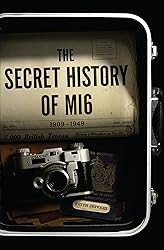
Keith Jeffery was a historian from Northern Ireland. He taught at Queen's University in Belfast. And MI6 chose him — out of all the people they could have picked — to write their official history. They gave him full access to classified files from 1909 to 1949. Nobody outside the agency had ever seen most of this material before.
That's a big deal.
So what does he do with it? He builds a careful, detailed account of how MI6 started as a tiny office with almost no resources and grew into one of the most powerful intelligence agencies in the world. He doesn't dress it up. He doesn't sensationalize. He just tells you what the files say — and the files say a lot.
The book starts before World War I. MI6 in those early years was small and still finding its place. But the first war pushed it to grow fast. New networks. New codes. New agents in new countries. By the time World War II arrived, the agency had decades of hard lessons behind it. And it needed every one of them.
What hits you in the early chapters is how improvised the whole thing was at the start. These weren't polished professionals running slick operations. They were often making it up as they went. Some missions worked. Some failed badly. And the people who ran MI6 had to learn from both.
Jeffery names the agents. He walks through the real operations. He shows you how British spies worked across Europe, Africa, and Asia — often under cover, always under pressure. Some of these stories are gripping. A brave man in a hostile city, passing information that could cost him his life if the wrong person found out. Real stakes. Real people.
But here's the honest part — and I always try to be honest with you. I gave this three stars on Goodreads. The book is long. Very long. And some sections drag. Jeffery writes like an academic, not a storyteller. He covers everything, which means he covers too much at the same time. If you're not already interested in British intelligence history, this book will test your patience.
But if you are? It's a gold mine.
No other book gives you this level of access to MI6's early years. The files Jeffery used were never meant to be public. And he treats them with care — he doesn't spin them, doesn't cut corners, and doesn't pretend the agency was something it wasn't. He shows the failures alongside the wins. He shows the fear and the doubt behind the bold decisions.
Jeffery died in 2016. But this book stands as his best work and a gift to anyone who wants to understand where modern British intelligence actually came from.
Three stars for readability. Five stars for importance. Worth every page if you've got the patience for it.
Comments
Post a Comment